I Can Speak French So Dont Criticize Me Again in French
You're in a pickle. You need to communicate with a French person only don't speak French. If you're lucky, the person speaks better English than y'all practice French and is not too shy to give it a go. You lot should be very grateful. You should also know that you're however in acornichon. This is the second commodity in the series Lost in Traduction – things you didn't know y'all'd have to translate in French republic.
I want to be very clear nearly the intention of this commodity – information technology is a guide whose merely objective is to amend communications betwixt Francophones and Anglophones. As we've seen recently by the valiant efforts President Macron made to speak English in public, there is aplenty ground for misunderstanding, even when English words are used (like 'delicious'). I don't mean to criticize him in the least. Au contraire! President Macron is more eloquent in English than the majority of our native speakers. He, and every other Francophone, should exist encouraged to speak English, right? Just if we stare back at them with confused looks, or heaven foreclose giggle at them, they'll probably exist sorry they even tried. So, this is a primer for us Anglophones who are lucky enough to take a French person speak to us in English. They've already met the states more one-half fashion. Now it's upwardly to us to figure out what they mean.
1. Words they think are English
Just like we call up we audio cool sprinkling French words into our chat, the French similar to do the same with English. The only problem is when the Anglicism either doesn't be in English language or means something different. It seems that the French believe adding the suffix 'ing' to a word makes it English (like we add o's to words to make them Spanish). So here are some words that French people may think you lot sympathise:
- Baskets – lawn tennis shoes/trainers/sneakers (no joke)
- Brushing – a blow-dry out
- Jogging – a pair of sweatpants/rail suit
- Sweat – a sweatshirt
- Pressing – a dry cleaner
- Footing – a jog
- Parking – a parking lot/machine park
- Self – a self-serve establishment
- Smoking – a tuxedo
- String – a thong or Chiliad-string
- Dressing – a walk-in cupboard
- Relooking – a make-over
- Planning – a schedule or agenda
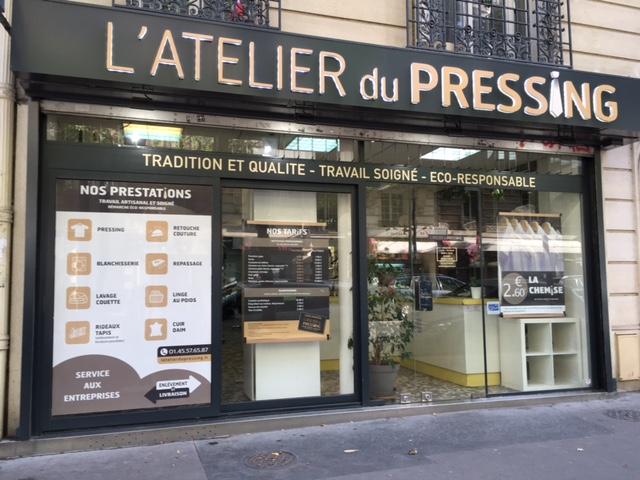
A French dry out cleaner (© Mappy)
two. Words that are English but you lot'd never know
About of these are confusing considering they don't sound the same coming from a French oral cavity, except the first ane. Ordering nutrient items with English language names becomes a surreal experience in France, equally you lot try to say them the way they do:
- Talkie-Walkie – they just wanted to switch information technology around, keep it fresh
- Wi-Fi – 'wee-fee'
- Hullo-Fi – a bit dated now, merely same trouble with the short I, sounds similar 'hee-fee'
- Has been – an actual expression in English that means the same thing in French, but sounds like 'azbeeen'
- McDo – short for McDonald's, of grade, but they say 'MacDoh'
- Smoothie – have fun ordering this i, unless you say 'smoossy', they won't go information technology
- Brownie – 'broh-ny'
- Thriller – you know, Michael Jackson'southward best video 'Treeler'
- Spiderman – 'speederman'
- Colonel – well, here it's the English language pronunciation (kernel) that's messed up, the French pronounce the word as information technology's spelled
3. Imitation amis
These are words that are similar in both languages merely have dissimilar meanings:
- Douche – French word for shower…highly unlikely they're referring to the other meaning!
- Carte du jour – Information technology's not the paper you order from (la bill of fare) but more of a 'repast deal'
- Actually – Actuellement in French means 'at this moment' whereas it has a 'despite what you may believe' connotation in English. I had a skilful chuckle in one case while waiting for a delayed flight in French republic. The airline employee first announced in French that the flight was boarding now, then said in English 'the flight 123 is actually boarding."
- Eventually – Eventuellement means 'potentially/possibly' in French, which is quite unlike from the English significant of a certitude that'due south just a thing of fourth dimension.
- Preservative – Be careful of this 1, as the French discussion for safe is préservatif.
- Skid – men's underpants/briefs
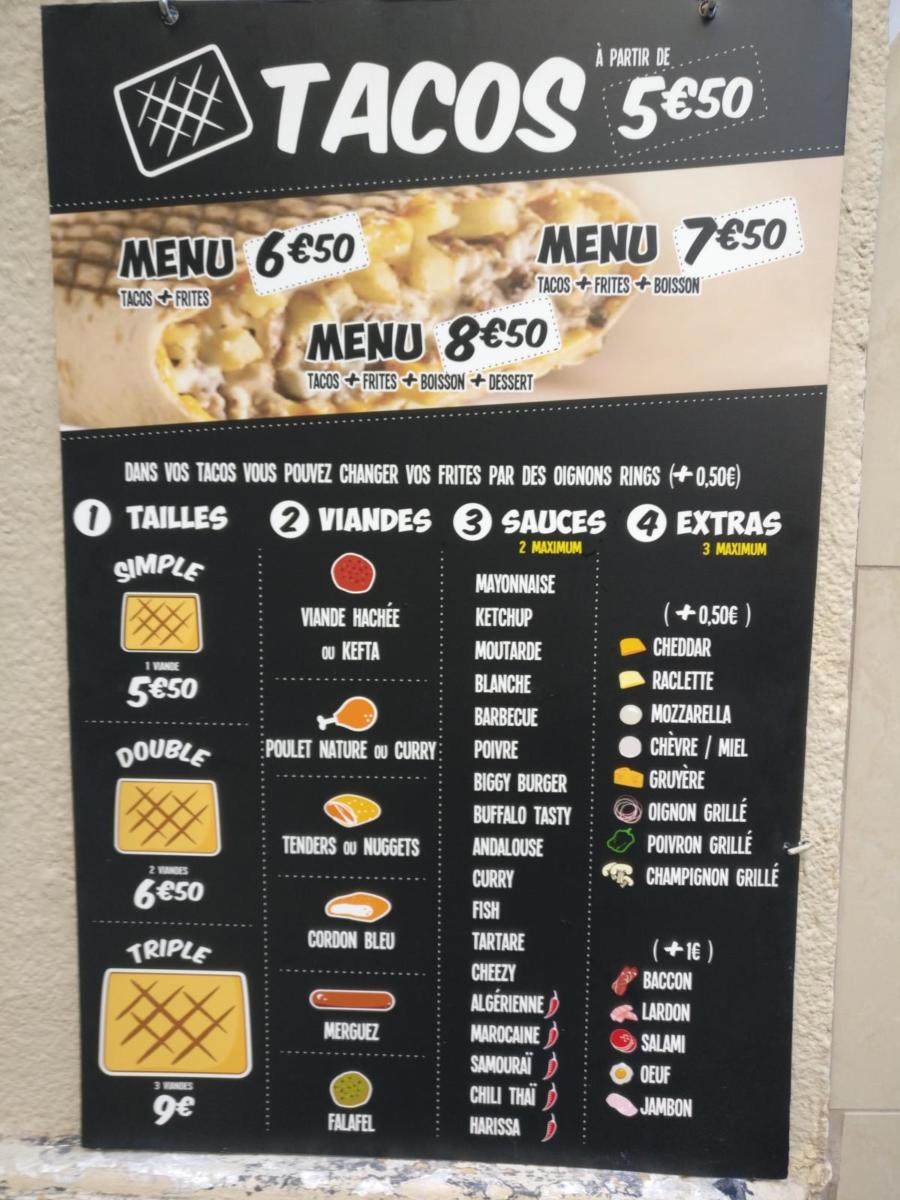
- Tacos – This ane makes me cry. For a long fourth dimension the French referred to tortilla chips as 'tacos' and then they decided it was a fast food particular. I'll save you the heartache of dashed hopes…this abomination is more like a Hot Pocket than a taco! Check it out:
4. Letters left off
S:
This is one of the almost disruptive things for English speakers, since we pluralize words by adding an Southward to the stop in virtually all cases. The French use a plural article in front to indicate more than 1 item (les, des) and hardly ever pronounce the last consonant in Whatsoever word. Pay attention to the context to make sure you know if the Francophone is referring to one or several, as even advanced speakers ordinarily omit the last S in a plural substantive.
* Bonus tip: English words for foods often get an S ending, even when they're singular – "You desire 1 muffins/cookies/tacos?" I suppose this is overcompensation for the in a higher place.
H:
Y'all wouldn't retrieve a tiny exhale could brand such a deviation, but information technology does! The alphabetic character H is never aspirated in French. They don't even put an imaginary Y in front, as some English-speakers practise (human) – it's merely completely silent. "You lot're as useless as the H in Hawaii" is a wisecrack that only makes sense in French. So if your proper noun starts with an H, you lot may non recognize it in French – you are at present Ellen, Arry, or Eezer (Heathers have information technology crude). If you lot want a alive example, enquire your French friend to read aloud the word 'hedgehog,' and y'all'll understand what I mean.
5. Letters added
H:
Words that start with vowels tin can also trip upward French people. I'one thousand not sure why, considering they take them, too, but when a French person encounters an English word that starts with a vowel, they have a tendency to add an H in front. If you read the previous paragraph, you lot understand how baroque this is. They don't pronounce the H when it's there, and sometimes add together ane when it's not in that location! "What exercise you want to heat?" "She was quite hangry at me." You can't be too sensitive if your name is Evy…"Ah, y'all are Heavy – pleased to meet you!"
P, B, W, K:
Too ironic, the French oft pronounce the (few) silent messages in English words. The P is pronounced in French words like psychologist, pneumonia, and pseudonym, so they tend to pronounce them in their English equivalents.
The silent B is less a problem when it comes later on Grand (comb, thumb, climb), possibly because it'southward the last letter and so naturally silent in French. However, in words similar 'debt,' 'subtle,' 'plumber,' or 'incertitude,' the B is frequently voiced.
When the French pronounce the silent Due west in words like 'wrap,' it sounds like a V. They are popular sandwich alternatives, so you need to say 'vrap' if you're ordering one in France. In words like 'who,' the Due west sounds like 'woo' when pronounced.
In that location are very few words that first with 'kn' in French, so beginners in English may pronounce the Chiliad.
ED, ES (at the end of words):
They don't really add together these letters so much as they pronounce them much more than we practise. 'Managed' becomes three syllables. Or they can leave them off altogether like with the S, leaving y'all to wonder which tense they mean – "I talk to John." ?? An ES at the end also becomes an extra syllable. 'Clothes' sounds like 'clozes,' and 'months' is often said 'monthez.'
Photo by Amador Loureiro on Unsplash
6. Letters commonly mispronounced
Anyone trying to imitate a French emphasis knows that they accept a signature way of pronouncing 'TH' and brusque 'I' sounds. To be fair, the letters beneath are problematic for other not-native speakers, too, not only the French. And lord knows that French has some letters that are well-nigh impossible for native English language-speakers (I'm looking at you 'R' and 'U').
TH:
Most oftentimes sounds like 'Z' or sometimes 'South'. Why is the 'TH' sound so difficult for French mouths? Considering they feel light-headed pushing their natural language out across their teeth. Out of self-consciousness, they keep the natural language backside the teeth and brand the 'Z' sound instead.
I:
While they like to say the long I – "information technology's my life!" – and have that sound in French (aïe), the brusque I is merely insurmountable. The short vowel sounds in English, and the shwa, don't really exist in French, only the short I is the biggest trouble-maker. Even the near advanced speakers will say 'sheep' for 'ship' and 'green' for 'grin.' Equally I mentioned in Part one of this series, a French person using the words 'sh*t' or 'b*tch' is more likely to confuse than offend.
CH:
These letters form a 'SH' sound in French, so it can be hard to tell if the person is saying 'choose' or 'shoes' in English. When the French desire to capture the same CH sound, they put a T in front, similar to tchat, because 'chat' with the 'sh' audio is 'true cat' in French.
J:
Like many languages, French has no difficult J sound, as in jungle or Jewish. If you gear up your ear to wait the softened 'zh' version (similar in Zsa Zsa Gabor), you'll probably understand the give-and-take without as well much trouble.
LD:
I've noticed that the French accept problem with some 'ld' words. They manage alright with 'baldheaded' and 'older', just ask one to say 'it's a real wild world' and you'll imagine Scooby Doo with peanut butter on his natural language.
R:
Let'south face it, Rs are a hurting in near foreign languages! Just equally nosotros struggle with the French R, which is very slightly rolled at the back of the tongue, they tin't get their mouths effectually English language Rs. Words like 'rural,' 'rarely,' 'squirrel,' and 'bureaucracy' are pure punishment for a Frenchman. In fact, they'll likely detect substitutes for difficult R words whenever possible, so the letter may never cause you confusion when listening.
7. Confusing letters
If you are unsure of a word the French person has said, yous could ask them to spell it…but in that location again yous're on treacherous footing! Even the letters of the alphabet don't audio the same. I advise learning the international radio alphabet (https://world wide web.icao.int/Pages/AlphabetRadiotelephony.aspx).
- J – pronounced 'zhee'
- One thousand – pronounced 'zhay'
- Y – 'e-grek'
- W – 'double 5'
viii. Stressful syllables
With the mispronounced and left off letters, the misplaced syllable stress rounds out the Terrible Top 3 for sources of Anglo-French defoliation. And you can't blame the French for this one – their linguistic communication follows unproblematic rules for intonation…basically the final syllable is the one that's stressed. In English language, there are so many rules and exceptions that you have almost no risk of getting it right the start time you say a word.
- Develop – My pet peeve! Even nearly bilingual speakers will stress the first syllable. I've started a personal crusade to get at least Web Developers, who have the word in their job title for Pete'southward sake, to pronounce it 'de-VEL-oper' rather than 'DEV-eloper'.
- Focus – As the word is oftentimes used in international concern, I'm far from the first person to observe the French mispronunciation and cringe. It's about as prevalent as DEV-elope, just the ensuing confusion is much worse. Since the French pronounce information technology with an unstressed O and emphasize the 2nd syllable, it invariably ends up sounding like 'f*ck us.' Awkward = existence in a meeting where a French person tells someone they 'demand to focus.'
- Engineer – Stressing the 2d syllable of this give-and-take makes for another cringe-worthy error, every bit poor President Macron showed the states in one of his first speeches in English. Saying 'en-GINE-ner' makes the word rhyme with 'vagina.' I'll never be able to un-hear that one.
- Tomatoes – Harmless and cute later on the last ii, merely we did lose some fourth dimension trying to figure out what 'tummy toes' were…
- Lieutenant – Similar to our problem saying 'vrap', 'lieutenant' is a French word, so they'll pronounce it similar ane. This means the terminal syllable is stressed (lieu-ten-Emmet), and not the second ane as in English.
9. Proper nouns
Some things are difficult to learn new names or pronunciations for, specially because they often audio similar to the original you offset learned. It's kind of like with counting. I know all the numbers in French, but when it comes to counting or doing mental math, my brain is much more efficient in English.
- Countries – The ones that are shut enough to confuse are the ones to watch out for. Chine, Japon, Inde, Maroc, Espagne, Norvège, Islande…sure, y'all tin can figure them out in written form, but this article is about the challenges of understanding a French person SPEAKING English.
- Cities/States – Londres, Pékin, Séoul, Le Caire, Mexico (a city in French!), Athènes, Naples, Sydney, Hong Kong, Detroit, Ohio, Hawaï… 😉
- Celebrities – Unrecognizable: Gwyneth Paltrow, Kirk Douglas, Hugh Hefner, Joaquin Phoenix, Matthew McConaughey, Halle Drupe, Keira Knightley, Martin Scorsese, Charlize Theron…

Kirk Douglas 1963 ©DR/Wikimedia Commons
10. French words you misunderstand
Here the defoliation doesn't stem from a difference in pronunciation, because the words are French – it'south but they don't mean the same matter where we come from. They are faux amis from their side.
- À la style – Means 'in fashion' and has nothing to practise with water ice cream.
- Bonne nuit – It literally translates every bit 'goodnight' but the French only say it right before literally going to bed.
- Bureau – It means part, like in English, but information technology'due south as well the word for 'desk' in French, and so the pregnant isn't always articulate ("eet eez in my bureau").
- Entrée – Information technology ways either foyer or the starting time class of a meal in French. My female parent and I went round and round with a waiter in Paris when he kept asking for our entrée order. We'd say steak, and he'd say "OK, but what do y'all want for your entrée??" The chief course is called the plat principal in French.
- Toilette – refers to personal grooming in French, rather than the porcelain god (Eau de toilette is Not toilet h2o). While a French person may exist talking well-nigh an actual toilet, they ordinarily phone call information technology a WC (pronounced Vay-Say) for water closet.
- Terrible – Perfectly normal that this word causes confusion, as it tin can mean either awful or fantastic in French. The only manner to tell what the French person ways, in either language, is by the context.
- Misfile – This means embarrassed or bothered in French, which can 'confuse' an Anglophone.
- To profit – This oft has a positive connotation in French and means to enjoy or truly benefit from something. If a Frenchman asks whether you 'profited from your vacation,' he's non asking whether you worked a side job or smuggled in some contraband.
- Courage – The French utilise this word a lot to hateful fortitude or wherewithal rather than bravery. If someone has a lot of work to do, it'southward common to wish them Bon backbone!
- Bless – The verb blesser means to hurt or injure in French, not to bless or consecrate.
- Crayon – a lead pencil, not the colored wax thing
- Demand – As demander is the verb 'to ask' in French, there is a lot of room for misunderstanding here. Existence asked, "what did you demand?" afterward asking a simple question can make you lot feel flustered.
- Grosse – Means really big or fat, Non disgusting. (Note: it simply sounds similar the English give-and-take 'gross' when modifying a feminine noun)
- Arrive – The French use j'arrive to mean 'I'm coming' rather than to indicate inflow. It's likewise very common to hear the verb arriver à to mean 'to exist able to.' So if the French person in front of you says "I don't arrive," they mean they are trying to do something and not succeeding.
- Oh là là – Very common and basically the equivalent of 'wow' in French…no lascivious pregnant by nature, just certainly tin can be if intended! 😉
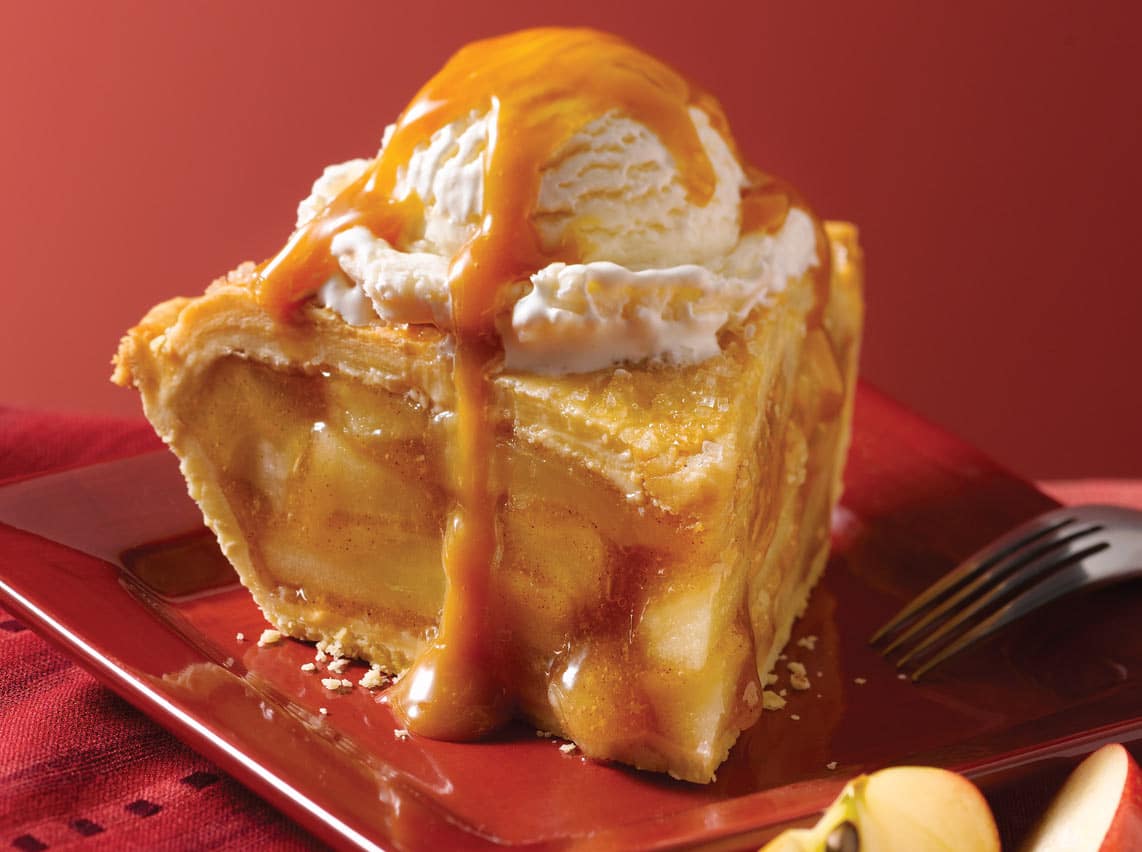
This is not known every bit "à la way" in French republic (© Bakers Square)
11. English language words they usually confuse
These errors are subtle merely can still lead to confusion:
- Interesting vs. interested – "I'm very interesting in that subject."
- Fun vs. funny – "Nosotros had a funny time at the party."
- Sensitive vs. sensible – mix-ups are due to the fact that 'sensible' in French means sensitive!
- Learn vs. teach – "You learned me that."
- Missing – "I'1000 glad you're dorsum. You missed me." This verb works the other way in French.
12. Unlike perspectives
And finally, yous won't understand some things a French person says to you, regardless of the words they use, simply considering they see the earth differently.
Making a appointment:If today is Sunday, and a French person says "see you side by side Thursday," they hateful in 4 days. In English, we would mean Th of NEXT week, every bit opposed to THIS Thursday in four days.
Location:They are less precise between 'here' and 'there' than nosotros are in English. When you phone call and the person answering the telephone tells you "Elle n'est pas là", they mean 'she is not here' even if the literal translation is 'she is not there.'
Elevation:If you don't already know, the floors/storeys or building levels piece of work differently in Europe. The ground flooring is nil, or rez-de-chaussée in French, and they starting time counting at the next level up. If your French friend tells y'all to meet her on the third flooring, brand certain you know which one she ways earlier climbing all those stairs.
Possession:Since possessive pronouns agree with the object rather than the discipline in French…hold on, sorry about that, I just channeled my inner grammar nerd! To put it only, they don't have different words for 'his' and 'hers' in French, then sometimes they'll mix it up in English. It's just like us with word genders – le table, la tabular array, what's the difference?
Genders:And because genders are an essential part of the French language, they tend to assign them to things that don't have genders in English. I once heard a Frenchman get angry at a wing and phone call information technology 'a beetch,' for example.
Conclusion
It's been said (not past me!) that it's easier to learn French than to understand a French person speaking English language. I would certainly encourage yous to learn French, particularly if you're living in France, because it's a rich and cute language. But if you feel that fluency is beyond y'all, I hope this comprehensive guide volition go far easier on the French people indulging you by speaking English. 😉
If yous can add some troublesome translations or pronunciations I've forgotten, I'd love to see them in the comments below.
Find the first "Lost in translation" commodity here.

Dennelle is the President of Renestance and a bilingual American who's lived in France since 2000. She loves so many things nearly France, its language, culture, geography, quality of life... that she started a business to aid others realize their dreams of living in this incredible place.
All articles past: Dennelle Taylor Nizoux
Source: https://www.renestance.com/blog/lost-in-translation-part-2/
0 Response to "I Can Speak French So Dont Criticize Me Again in French"
ارسال یک نظر